Featured Blog Posts
2025-10-15 By Dishanth Kembhavi

Moderate

E-Bikes Available

80 Kms / 49 Miles (Avg. Daily Distance)

12 Nights / 13 Days (7 Cycle Days)
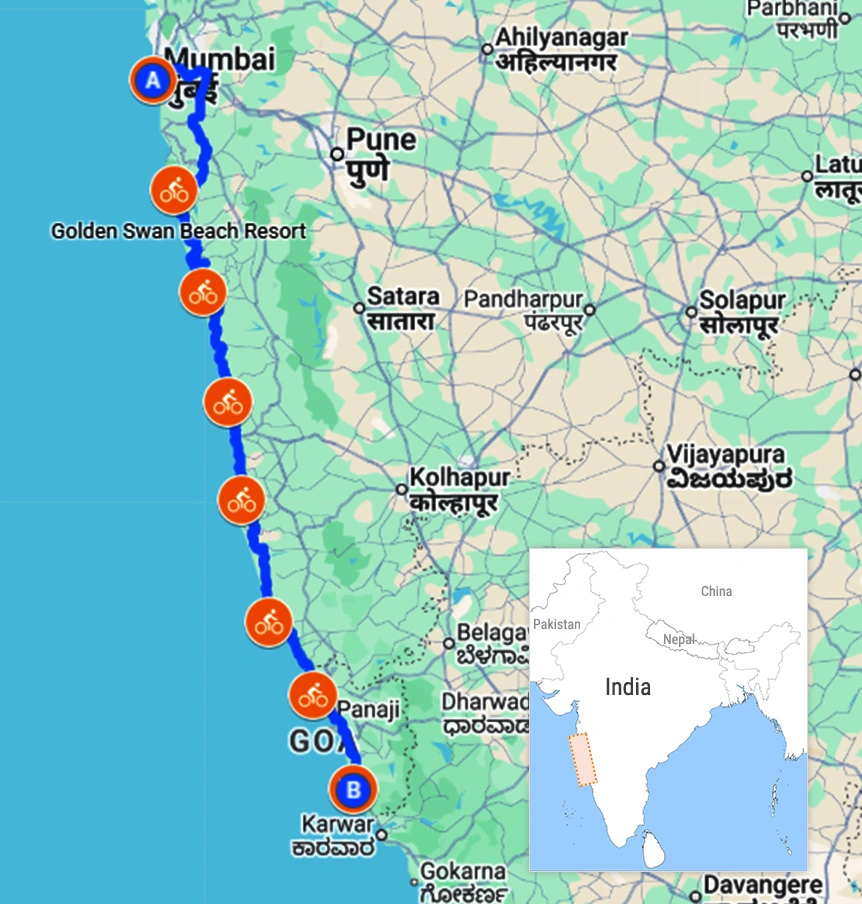
Our Mumbai to Goa cycling tour is definitely not just a mere point-to-point transportation. It is really about traversing and following the entire west coast of India at such a rhythm and pace that allows you to delve and fully absorb the experience. The trip initiates in Mumbai, where the day is dominated by traffic throughout, roadside chai, and the bustling energy of the city, which is almost overwhelming to the senses the entire time. However, once you get away from the urban frenzy, the ride almost instantly reveals its totally different side. The streets become deserted, the atmosphere is lighter and cleaner, and the Konkan coast gradually unfolds stage by stage.
More than just a mere road ride is what this cycling tour from Mumbai to Goa offers to riders. The journey, instead of always resorting to the busy main roads, goes a totally different path, which is not only much more rewarding but also much more enjoyable along the way. The use of smaller roads, ferry crossings, village lanes, and scenic backroads is employed to a great extent. Parts of the route follow right along the sea, while others go inland through the coconut groves, fish market communities, forests, and country areas before coming back out to the coast again.
A Ride That Keeps Changing
One of the most exciting parts of this journey is the days that always bring something different. One day might start with a ride along the open sea and beautiful coastal views, while the next day the road might take you right over a headland, down to a creek crossing, or even through a village where you can see fishing boats, local markets, and everyday life. All these scenes will be part of the Mumbai Goa cycling tour.
There is also a great deal of diversity in cycling. Certain sections will be very smooth and flowing, perfect for getting into the groove and just enjoying the ride. Others will involve short ascents, hilly terrain, and the kind of ups and downs that give you the feeling of having worked for your ride without being too much. So it's something of a balance, arousing your interest and at the same time giving enough freedom to enjoy your surroundings.
More Than Just a Cycling Holiday
To start with, a Mumbai to Goa bicycle tour is a beautiful way of exploring the western coast of India at your own pace. Unlike moving in a car or a train, where you keep dashing from one place to another without even watching everything. However, if you see a roadside tea stall, you can simply go in for a cup, a local market which has caught your attention, or a quiet beach / a temple (old), you can just stop, soak in the atmosphere, and enjoy the moment. These unplanned stops often give rise to those memories that become the best souvenirs of the journey.
But obviously, the journey is so much more than just cycling. As you cycle past coastal villages and small towns, you start to understand the daily life of the Konkan coast inhabitants more intimately. In addition to tasting local cuisine and lodging on the beachside, you will pass through fishing communities, visit temple towns, and interact with the local people. Fresh fish, local tastes, ferry rides, and quiet nights after cycling will make the Mumbai to Goa cycle trip seem like a real journey and not just another cycling holiday.
Route, Terrain, and Experience
The Mumbai-Goa cycling route has so much variety to ensure the ride remains enjoyable throughout the entire journey. As the coast changes its shape near river mouths, estuaries, and coastal ridges, there are oscillations in the form of climbs and descents happening quite regularly during the trip. Some of them are short and intense, while the others are fairly slow, but their whole flow is supported by lovely roads, beautiful landscapes, and less difficult sections. This route truly deserves to be ridden by those cyclists looking for a tough ride coupled with a great travel experience.
What to Expect on the Tour
Finish in Goa
When you reach Goa in the end, it is as if your trip was far more than just traveling from one point to another. You have traveled on your own a big part of the west coast of India, you have seen the landscape changing every day, and you have really experienced the Konkan in a way that most tourists don't. The final days bring a more relaxed coastal feel, which makes a fitting finish to the ride.
If you are looking for a fully supported Mumbai to Goa cycling tour booking, this tour offers a memorable way to experience the Konkan coast, through great riding, changing scenery, local culture, and the simple satisfaction of travelling all the way to Goa on two wheels.
We wait for you at the airport to take you to your hotel. It will take about an hour to reach the hotel and check you in. You will be free for the rest of the day. You can use the time to relax and get over your jetlag or begin preparing for the cycling trip.
Hotel: The Gordon House Hotel / or similar
A sightseeing tour of Delhi is the perfect primer to our Mumbai Goa Cycling TOur. A purposeful rest day before the riding begins. We start with Dharavi - one of Asia's largest informal settlements, and one of the most misrepresented places in the world. Up close, it functions like a city within the city: tanneries, recycling plants, bakeries, pottery workshops. More industry than poverty, more ingenuity than hardship. From there, the Gateway of India and the Prince of Wales Museum - art, archaeology, natural history. Walk as much as you can. Your legs will carry you, and the passive movement is good prep for what comes next.
Hotel: The Gordon House Hotel or similar
The ferry from Gateway of India to Mandwa Jetty is the ceremonial first crossing - about 45 minutes on the water, and one of the better ways to leave a city. You're already looking south. From Mandwa, the riding is coastal and relatively forgiving in the first half. The road surface alternates between decent tarmac and patchy village lanes, so a MTB with 32–38mm tyres earns its keep from the very first day.
We take backroads wherever possible - arterial roads that thread through cashew orchards and fishing hamlets, with the sea appearing and disappearing on your right like something intermittently reminding you where you are. Along the way we ride through the Phansad Wildlife Sanctuary, a coastal woodland where the tree canopy closes over the road and you're suddenly pedalling somewhere that feels nothing like Maharashtra's coastline - cooler, quieter, and dense with birdcall.
The terrain builds through the day. You'll encounter short punchy climbs of 60–100 metres — enough to spike the heart rate, recover on the descent, and repeat. Nothing technical, but the cumulative gain starts to register by afternoon.
The day ends at a beach resort in Murud. After dinner, you'll want to walk to the waterfront and look out at Murud-Janjira Fort sitting on its island in the middle of the creek. The only fort in India never conquered by the Marathas, Mughals, British, or Portuguese. It is worth standing still in front of for a few minutes before you go to sleep.
Hotel: Golden Swan Beach Resort or similar

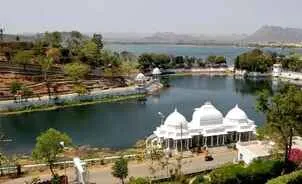
The first real ferry of the tour and the first real lesson in Konkan time management. We cross the astonishingly wide Rajapuri Creek from Agardanda to Dighi. The Agardanda–Dighi ferry runs hourly from 8 AM to 9:30 PM, takes 15 minutes, and sets the rhythm for the whole week: know your crossing times before you leave the guesthouse, because missing the last one in the dark is not a fun problem to solve.
From Dighi, the terrain picks up noticeably. The road rises and falls over a series of coastal headlands - short climbs of 80–150 metres each, with fast descents that reward you with sea views if you have the nerve to look up. We ride through fishing villages where the boats are painted in colours that have no English names, and where the smell of drying fish hits you from 300 metres out.
Mid-afternoon, we reach the banks of the Savitri River for our second ferry crossing. This one feels quieter — a flat-bottomed boat, your bicycle leaning against the rail, the river wide and calm. Chat with whoever's on it. The people of the Konkan are among the most genuinely hospitable you'll meet anywhere in India.
We finish the day in Dapoli, a hill station used by the British troops in the colonial era, sitting above the coast at around 400 metres. Our stay is at Lotus Eco Beach Resort in Karde. You've earned the beach.
Hotel: Lotus Eco Beach Resort or similar

This is the queen stage. The longest day, the most climbing, and the one most riders will talk about for years. Set your alarm early. We leave Karde and hug the shoreline through a series of fishing villages, the road constantly negotiating with the headlands - up 120 metres, down to sea level, up again. The rhythm becomes almost meditative once you stop fighting it and start reading it. After crossing the Vashishti River, we continue south for roughly 75 km with a picnic lunch at Velneshwar Beach - a wide, empty stretch of sand where you can eat, stretch, and let your legs decide if they still work. If the timing and tide allow, get in the water. Cold salt water on your legs after 65 km is not nothing. The second half of the day is the most dramatic on the tour. We cross the Shastri River and approach Jaigad - where the fort stands on the headland above the river mouth and the sea, visible from several kilometres out. The ferry crossing here is one of the great moments of the whole route: a small wooden boat carrying you and your loaded bike across the wide mouth of the river, with the Jaigad Fort on its cliff above. We then enter the erstwhile province of Marathwada, historically under Maratha rule before the Mughals, and finish in Ganpatipule at a beach resort. Legs will be worked. Sleep will come easily.
Hotel: Blue Ocean Resort or similar

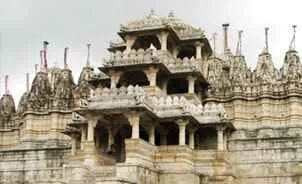
After breakfast, we walk to Shree Ganpatipule Temple - a Swayambhu Ganesh shrine built into a hillside, with white-and-brick-red walls that look as though they grew out of the rock. The temple faces the sea. Dress modestly, leave your shoes at the entrance, and give yourself time to simply be there. The rest of the day is yours. The beach at Ganpatipule is clean, relatively uncrowded, and perfect for the kind of doing-nothing that only makes sense after five hard days of riding. Most riders spend some time doing a passive bike check - wiping down the drivetrain, re-lubing the chain if it's been dry, checking tyre sidewalls for wear or embedded glass.
Hotel: Blue Ocean Resort or similar
Back on the bike, but the legs have memory now - the Konkan rhythm is in them. We head south toward Ratnagiri on undulating coast backroads, riding past fish markets where the morning catch is already being sorted, small temples with bells that ring on the wind, and the shallow mangrove basin formed by the Kajali River - a stretch of riding where the road cuts through a flat green world on both sides.
Through Ratnagiri town and past Ratnadurg Fort, Mandavi Beach, and crop fields, before crossing the Purnagad Creek formed by the Muchkundi River. The road varies between surfaced tarmac and uneven village lanes - nothing that requires a mountain bike, but enough that you stay alert and don't bury your face in your Garmin. The day ends at Ambolgad Beach Village, at a beach house with the ocean directly in front of it. There's no better way to end a riding day than with the sea a few metres from where you'll sleep.
Hotel: Samindar Beach House or similar

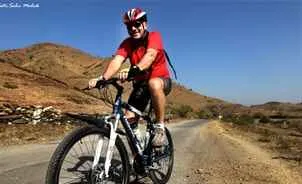
An early start and a mixed-surface day - coastal tarmac giving way to sections of dirt road as we ride south through Vaghotan, Devgad, Naingre, Achara Gad, and Karli. The route passes Bhagawatgad and Devgad - Maratha coastal forts that don't get the tourist traffic they deserve, sitting quiet on headlands above the sea. The vegetation gets denser down here. The roads get quieter.
Post-lunch, the surface changes again - some dirt, some stone, some beautifully smooth coast road. We cross the Kolamb Creek to arrive at Malvan Beach, where the overnight beach resort faces directly onto the Sindhudurg island fort in the distance. On a clear evening the fort's silhouette is sharp against the sky - built by Chhatrapati Shivaji Maharaj in 1664 entirely on a sea island, with foundations reportedly reinforced with molten lead poured into the seabed rocks. It has stood for 360 years.
Hotel: The Windmill Resort or similar

The final cross-border day. We leave Maharashtra and enter Goa.
The route uses a mix of tarmac and non-tarmac coastal roads to reach the Terekhol River crossing - the last ferry of the tour, and one of the most quietly significant. One side is Maharashtra. The other is Goa. The road surface improves perceptibly on the Goa side, and the signage shifts to Konkani and Portuguese-influenced English. The rhythm of the place changes.
We pass Arambol - the hippie beach at the northern tip of Goa, which has somehow held onto its character through decades of being discovered and re-discovered. Then Morjim Beach, a protected nesting ground for Olive Ridley sea turtles. Then Chapora Fort above the Mandovi River mouth, the whole of north Goa's coastline visible from the battlements.
We finish at Anjuna Beach. The final kilometres are flat, the tailwind cooperates if you've been good, and there's a particular sensation of arriving somewhere by bicycle that no other mode of travel replicates. You notice when the journey ends. We spend the night at Casa Anjuna, a boutique hotel that takes its cues from traditional Goan architecture — tiled floors, carved wood, and a courtyard that makes you want to stay put.
Hotel: Casa Anjuna or similar

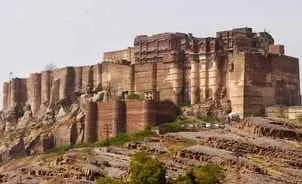
Full rest day. Anjuna Beach, the famous Wednesday flea market if the timing works, and the pleasant business of deciding you've earned this. Your legs will still be riding in your sleep - that's normal after a week of this kind of cumulative climbing. Let them.
Hotel: Casa Anjuna or similar
The last riding day, and a good one. We leave North Goa's bustle and ride south - along Baga and Calangute, across the Mandovi River into Old Goa, past the Basilica of Bom Jesus where St. Francis Xavier has rested since 1553. The roads here are village-width with Portuguese-era homes set back behind cashew and coconut trees, their laterite walls orange in the afternoon light.
The terrain is gentle by now - rolling, not grinding. We pass Varca and Cavelossim beaches before dropping into Agonda, one of the last genuinely quiet beaches in South Goa. Palm-grove resort, wooden cottages, beach directly in front. Put your bike away. You're done.
Hotel: Dwarka Beach Resorty or similar

Breakfast, beach, market. Goan nightlife if you have the energy for it, which after 11 days of this you might surprisingly find you do. The body adapts.
Hotel: Dwarka Beach Resort or similar
Breakfast, transfer, departure. The tour ends here on paper. In practice, it ends somewhere around Day 5, Karde Beach, when you first realise that you're going to make it and that the making of it is going to be the best part.
Tour Cost USD 2650 Per Person based on 2 Person travelling together for Exclusive Guided Private Tour.
Single Supplement USD 950
Note:To organize any private tour we need minimum 2 Person.
Note:Arrangement for domestic flight ticket or extension tour can be done on request
Note:For Private and Exclusive tour on your request we can change hotel or even we can work on itinerary to add or remove some destination or any services as per your requirement.
(Tamilnadu - Kerala)


(Karnataka - Kerala)