
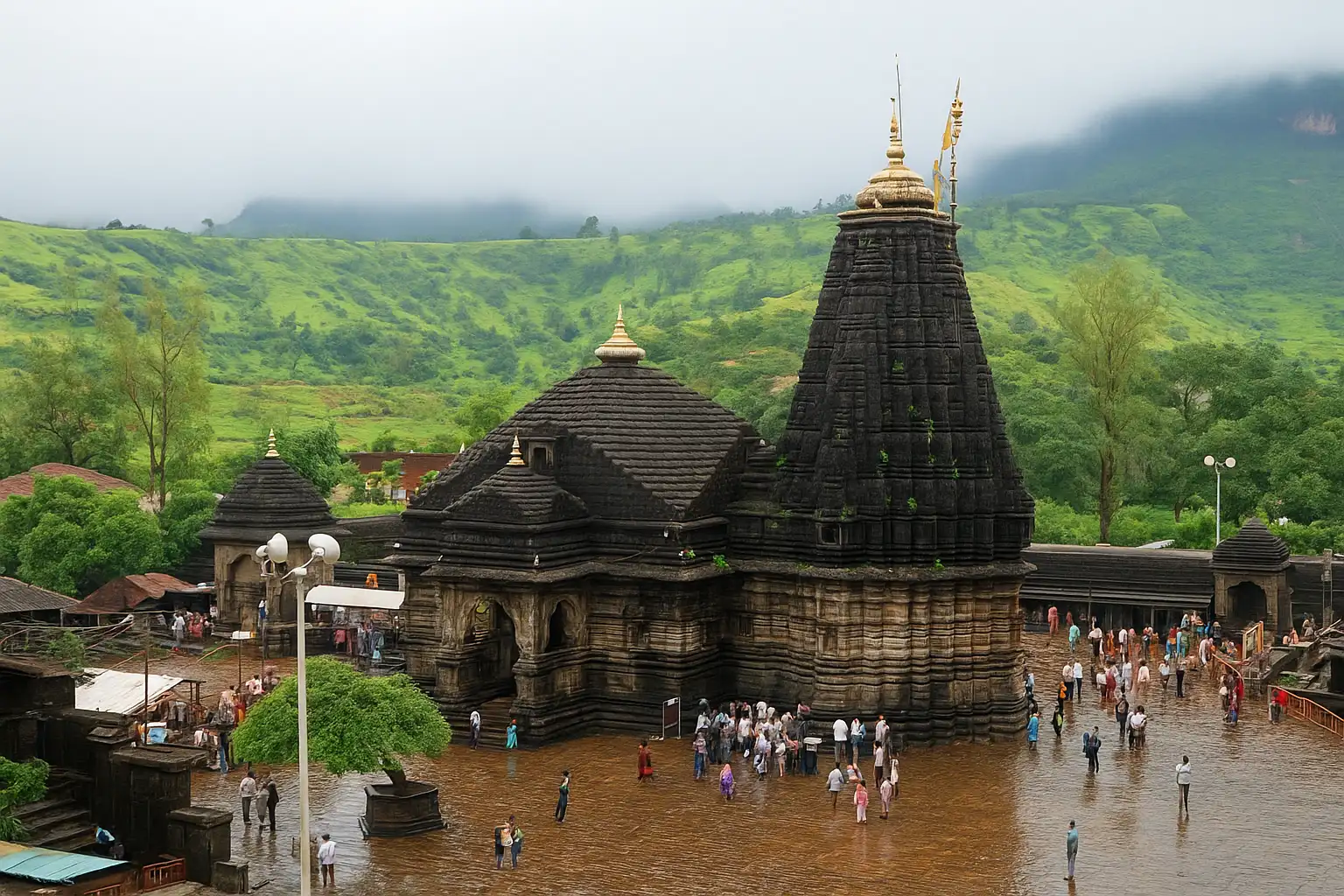

A Solo Cycling Expedition Through Maharashtra’s Five Sacred Shrines of Lord Mahadeva
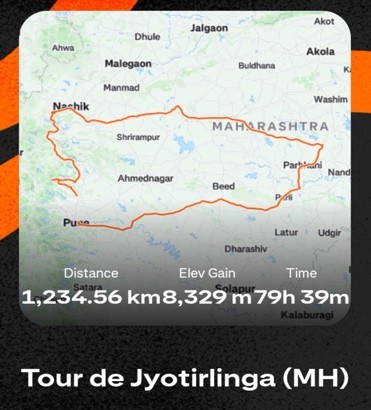
1,234.5 km · 9 Days · Pune to Pune
6 to 14 October 2025
“Mahadev was never waiting only at the temples. He was present in every single kilometre between them.”
The Ride at Glance
For riders thinking of attempting this route themselves: the essentials before the story begins. (https://strava.app.link/IPgAtfkrw4b)
Prologue: The Idea, Over Tea
Earlier I have done Solo Narmada Parikrama on bicycle and then last year, I rode the Shashtrokt Ashtavinayak Parikrama, of Lord Ganesha’s eight sacred shrines, entirely on my bicycle. That ride had barely finished settling into memory when a new thought started forming: if I’d pedalled to the son, it was only fair to now go to the father. Lord Mahadeva. Lord Shiva.
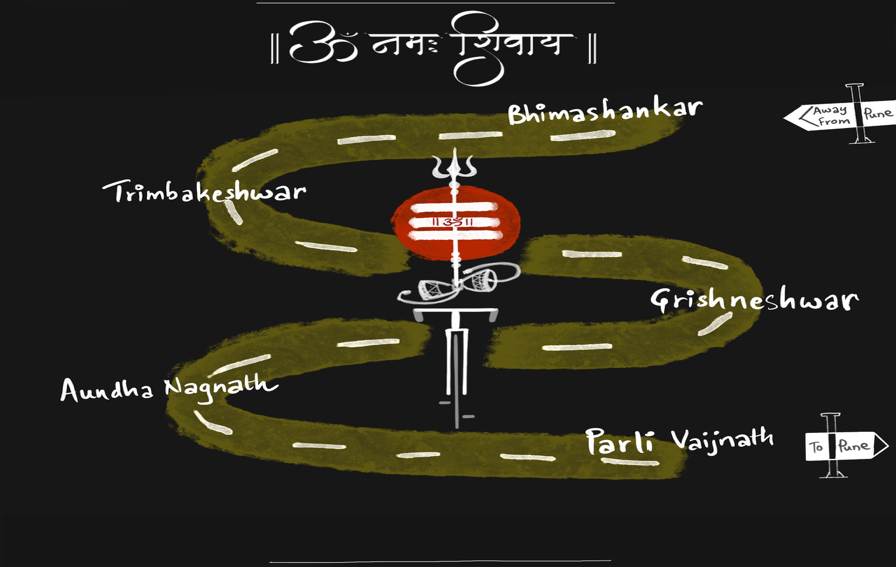
Mythology counts twelve Jyotirlingas across India, and three of them sit within Maharashtra. But ask any local, any pujari, any old man outside a temple, and he will tell you there are five: Bhimashankar, Trimbakeshwar, Grishneshwar, Aundha Nagnath, and Parli Vaijnath. I decided I would visit all five, on my own bicycle, in one unbroken ride. Quietly, I also suspected this might be my last long expedition through the Sahyadris, though the mountains, as usual, had their own plans for that thought.
सौराष्ट्रे सोमनाथं च श्रीशेले मल्लिकार्जुनम् ।
From the Dwadasha Jyotirlinga Stotram: ‘In Saurashtra shines Somnath, and in Shrishailam, Mallikarjuna’, the opening line of the ancient hymn that lists all twelve Jyotirlingas of Shiva across India.
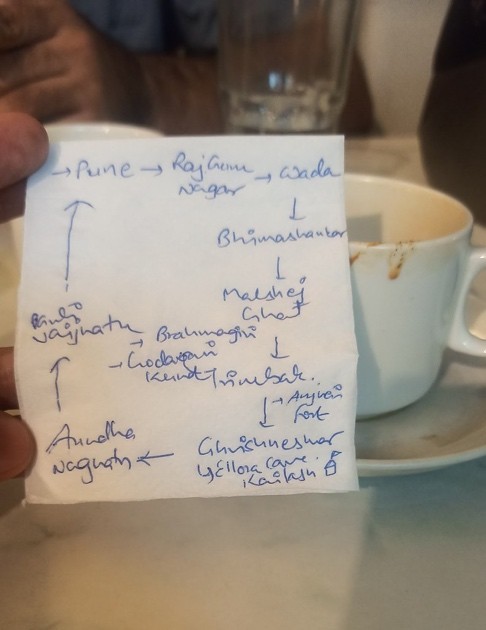
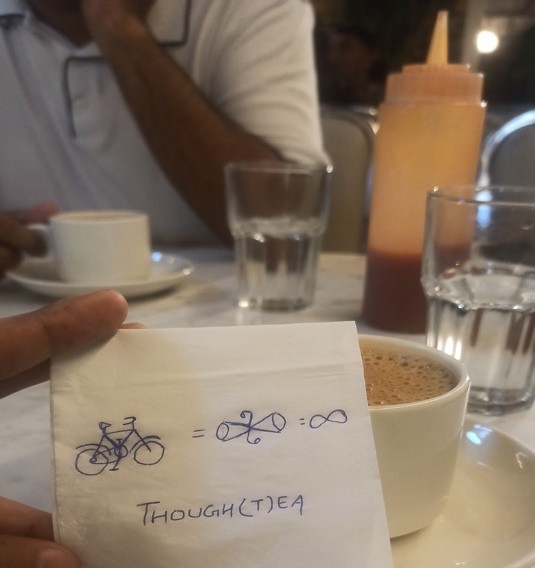
On 5th October 2025, the plan was born the way most of my plans are born: over tea, at Krushna Pure Veg near Fatima Nagar in Pune. A rough route took shape between sips, and just like that, Tour de Jyotirlinga had a name and a direction.
DAY 1 · (6 October 2025)
Pune to Bhimashankar: The First Climb
At 4 a.m. on 6th October 2025, Pune belonged to a different world. The city that usually moves with impatience was silent, save for a few milk vans, a barking street dog or two, and the hiss of an early tea stall boiling its first kettle.
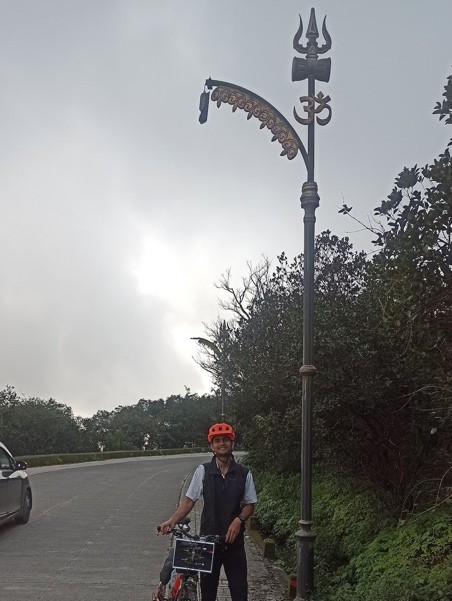
Sodium streetlights threw a dull orange glow over empty roads while I tightened the straps on my bag one final time. A small Damru with Poster (designed by my wife) hung from my handlebar, a quiet reminder of where, and to whom, this ride belonged.
People often ask why anyone would cover such distances on a bicycle when buses, trains, and flights all exist. Honestly, I still don’t have a simple answer for that. Some things make sense only once the journey has begun. This wasn’t a race. Not a fitness challenge. Not tourism. It was a solo cycling expedition across Maharashtra to five Jyotirlingas:Bhimashankar, Trimbakeshwar, Grishneshwar, Aundha Nagnath, and Parli Vaijnath. And somewhere inside all of it, in the mountains, highways, forests, villages, fatigue, silence, hunger, chai stalls, and temple bells, I wanted to enjoy…. just enjoy.
Small roadside temples released the sound of aarti into the cold air. Farmers walked toward their fields with tools slung over their shoulders. Smoke rose from kitchen chulhas. Somewhere, a radio played an old Marathi song. For the first few hours, everything was simply beautiful. Then the climbing began.
The road to Bhimashankar pulls upward into the Sahyadris, and it doesn’t ask politely. Traffic thinned, the forest thickened, and the air turned cool and damp. Long, winding sections forced a rhythm that only mountain cycling can teach: patience. You cannot attack a mountain for long. You negotiate with it. Every climb became a conversation between lungs and road. Trucks crawled uphill in low gear while monkeys watched silently from the trees. Fog drifted across the road so thickly at times that the next bend disappeared completely.
Bhimashankar is one of the twelve Jyotirlingas of Lord Shiva and, by local reckoning, the first stop of this circuit within Maharashtra. Tucked inside a dense wildlife sanctuary in the Sahyadris, the temple is linked in legend to Shiva’s fierce form as Bhima, said to have destroyed the demon Tripurasura here.
Reaching it on two wheels still feels like arriving somewhere the forest itself chose to protect. There are moments in solo cycling when the world shrinks down to almost nothing: the sound of your own breathing, the ticking of the chain, the pressure of the pedal underfoot, the next turn in the road. Nothing else exists. By the time I reached Bhimashankar, sweat had dried into white patches on my clothes. My shoulders ached under the weight of the load, and my palms had already gone slightly numb from hours on the handlebar.
And yet, standing near the temple after that climb through the mountains gave a feeling that no ordinary trip could have given me. Every one of those kilometres stayed inside the body. That night, sleep came instantly.
DAY 2 · 7 October 2025
Into the Wild Ghats: Bhimashankar Toward Trimbakeshwar
But the real test began on the second day.
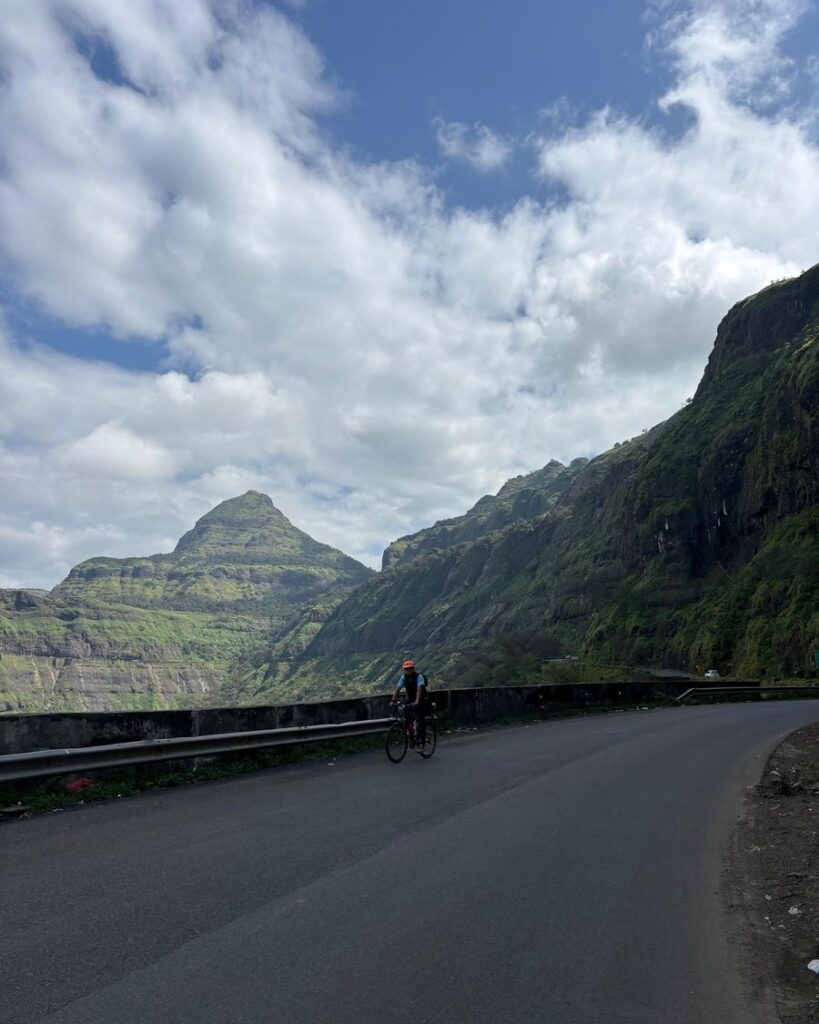
The route from Bhimashankar toward Trimbakeshwar cut through some of the wildest and most demanding sections of the Sahyadri range: stretches linked by Kasara Ghat, Igatpuri, and the terrain near Malshej Ghat. These roads were terrifying and breathtaking in equal measure, often within the same kilometre.
One moment the landscape opened into valleys layered with cloud and green cliff. The next came a blind curve, a broken patch of tar, a speeding truck, and a sharp descent demanding total concentration. The mountains felt alive in that stretch. Cloud shadows moved across the valleys like giant hands. Water trickled down black rock faces.
Deep forest swallowed entire sections of road into silence, and for long periods I rode without seeing another cyclist, or even another pedestrian. The physical effort turned relentless. Climbs dragged on for kilometres. Descents punished the wrists and shoulders. Heat returned suddenly the moment forest cover disappeared. Hunger arrived constantly, because the body was burning energy faster than any meal could replace it. Most days, I survived on one proper meal, ginger tea without sugar, and whatever local snacks a roadside stall had to offer.
Find Tea.
Continue Riding.
Reach Before Dark.
That evening brought one of the rawest experiences of the whole expedition. Because the region is tribal forest, there were no proper hotels,
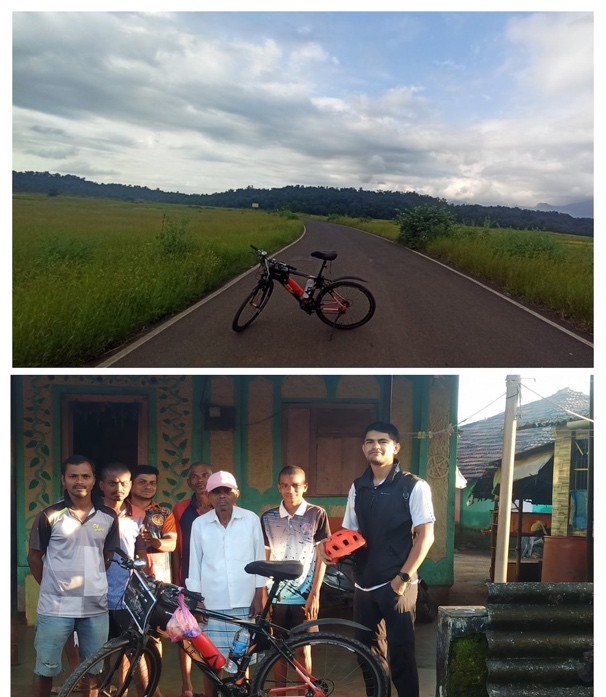
lodges, or shelters for long stretches. As darkness came closer, the shops vanished, the road emptied out, and the phone signal faded in and out until the forest had swallowed everything. I kept riding, expecting to eventually find some small lodge or dhaba. Nothing came. Slowly, the realisation set in: there might genuinely be nowhere to stay tonight. Finally, I reached a small tribal village near Dolkhamb tucked into the hills. No tourism here, no bookings, no convenience, just a tired cyclist arriving after dark, luggage strapped to the bike and a Damru swinging from the handlebar. The villagers took me in without asking unnecessary questions.
That night has stayed with me more than most of the famous places on this route. Modern travel usually protects us from uncertainty; cycling strips that protection away completely. You become dependent on weather, on strangers, on road conditions, on daylight, on simple human decency. In moments like that, Maharashtra stops being a map and starts feeling personal.
DAY 3 · (8 October 2025)
Trimbakeshwar and the Stillness of Anjaneri
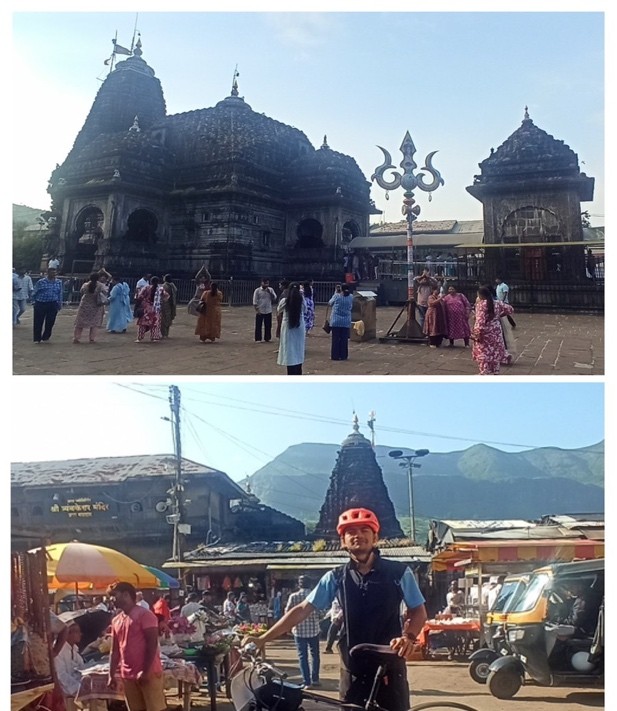
The ride rolled on toward Nashik and Trimbakeshwar the next morning. After the isolation of the mountains, these roads felt wider and more open through Kasara Ghat. By now my body had settled into a routine: wake before sunrise, pack the bag, ride, drink water constantly, stop for tea, continue.
Trimbakeshwar’s Jyotirlinga is unusual among the twelve. Instead of a single linga, it holds three small faces said to represent Brahma, Vishnu, and Shiva, and the temple sits at the source of the river Godavari. Pilgrims have walked to this spot for centuries believing a dip here, or even a glimpse of the sanctum, washes away lifetimes of accumulated karma.
The bicycle stopped feeling like equipment and started feeling like a moving shelter. Somewhere near Trimbakeshwar, I noticed my own mind changing. In ordinary life, thoughts jump constantly: between phones, conversations, tweets, trending current affairs, deadlines, distractions. But after days alone on a bicycle, the mind quietens on its own.
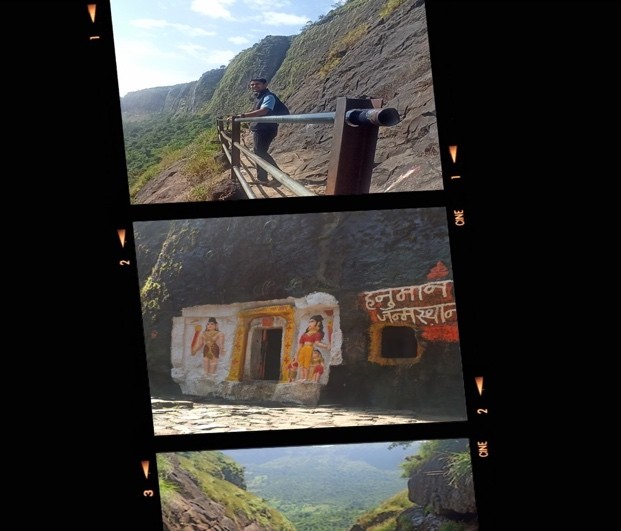
From Trimbakeshwar, I rode up to Anjaneri Parvat (mild to moderate kind of trek), believed to be the birthplace of Hanumanji. The hills there carried a powerful stillness. Ancient rock formations stood behind the villages, watching, the way they must have watched over centuries of pilgrims before me. Trek is of 4 kms one way, where I hired a rickshaw till the starting point from the temple on highway.
DAY 4 · (9 October 2025)
Trimbakeshwar to Grishneshwar: The Kopargaon Night
The route out of Trimbakeshwar toward Grishneshwar changed character all over again. The lush mountain green disappeared behind me, and heat took over. The roads widened, and long stretches of highway carried me through Chhatrapati Sambhaji Nagar’s dry belt, with trucks thundering past continuously. By evening on the 9th of October, I still hadn’t reached anywhere with a proper place to stay.
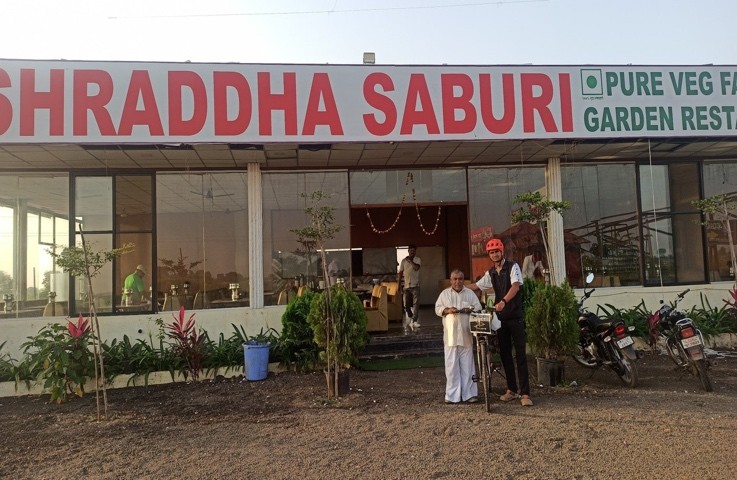
Near Kopargaon, along a stretch close to the Balasaheb Thackeray Expressway, the lodges and hotels I’d been counting on simply weren’t there. Darkness fell faster than planned, while truck traffic screamed endlessly along the highway. Eventually, I stopped for the night at a roadside dhaba, Shraddha Saburi, and the owner allowed me to stay there with the staff of the dhaba in dhaba itself. These moments became the real soul of the expedition. Not statistics. Not GPS screenshots. Not social media photographs. But uncertainty: unexpected nights, unknown roads, strangers helping without being asked.
Explore more cycling expeditions, scenic routes, and bicycle touring experiences across the country on Cycling in India.
DAY 5 · (10 October 2025)
Grishneshwar and the Ellora Caves
Morning brought dry plains stretching endlessly under a harsh sun as I pushed on toward Grishneshwar.
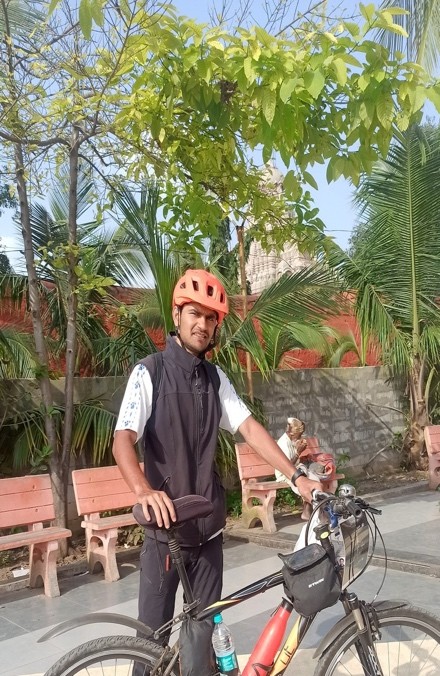
Grishneshwar is counted as the last, or in some traditions the first, of the twelve Jyotirlingas, and stands barely a kilometre from the Ellora Caves. Local legend ties it to the devotion of a woman named Kusuma, whose unwavering faith is said to have restored her husband to life and brought the linga into being.
Afternoon heat rising off asphalt has a way of breaking your concentration slowly. The body dehydrates before it even registers thirst. The wind stops feeling refreshing and starts feeling like air from an open oven door. There were stretches where the road simply seemed endless: pedal strokes turned automatic, and at times I genuinely lost count of how many kilometres had already passed.
Near Grishneshwar stood one of the most unforgettable places of the entire journey: the Ellora Caves, and the monolithic Kailash Temple, carved from a single mountain of rock.
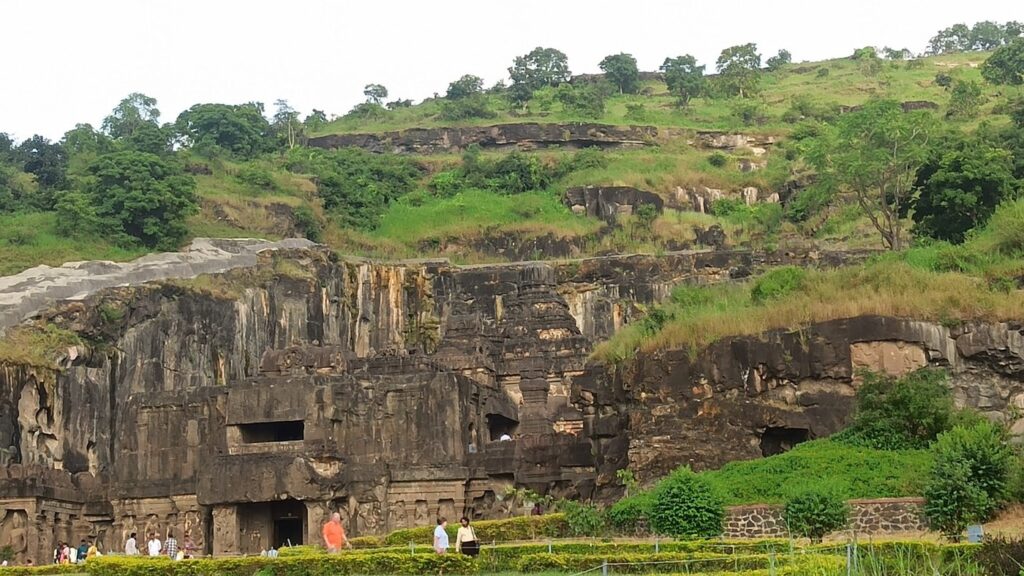
Standing in front of an entire mountain shaped into architecture, after days of physical exhaustion, produced a different kind of silence inside me. Every sculpture, every corridor, every stone surface carried impossible detail. Human beings had cut devotion directly into rock. I remember standing there, tired, dusty, sunburnt from the road, staring upward at that structure and thinking about effort in all its forms.
DAY 6 · 11 October 2025
Across the Marathwada Highways Toward Aundha Nagnath
The journey continued toward Chhatrapati Sambhaji Nagar and onward toward Aundha Nagnath via Jalna. These roads introduced a different kind of challenge altogether, not physical this time, but mental
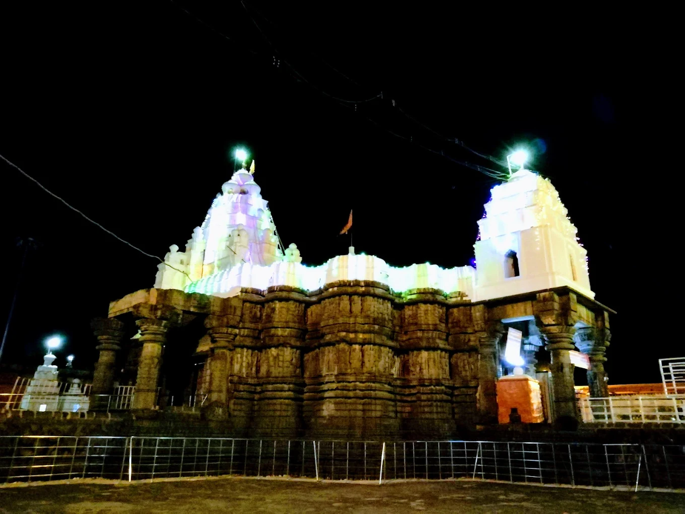
Aundha Nagnath is dedicated to Shiva in his form as Nageshwar, lord of serpents, and its temple, built in the old Hemadpanthi style of black stone, is among the oldest in this circuit
Solo riding turns intense on stretches like this. There’s nobody to complain to, nobody to distract you, and sometimes entire hours pass without a single word spoken aloud. And yet, somewhere inside that isolation, a strange clarity arrives too. The world becomes simpler. I reached Aundha Nagnath late evening around 7 PM and successfully able to do night rituals with the temple committee.
At every Jyotirlinga along the way, I noticed something curious: most people arrived fresh, stepping out of cars and buses, while I arrived carrying accumulated dust, sweat, fatigue, and soreness from hundreds of kilometres. Darshan after that kind of physical struggle feels deeply intimate, not because suffering makes anyone special, but because the road empties the mind long before you reach the sanctum.
DAY 7 · (12 October 2025)
Aundha Nagnath to Parli Vaijnath and Ambejogai
By the time I reached Aundha Nagnath, on the seventh day, my body was thoroughly worn down.
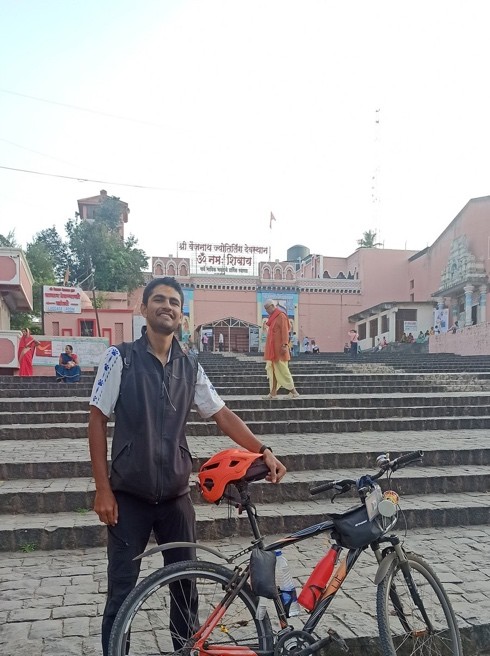
Knees protested every time I started again after a break. Neck muscles stayed permanently tight. Hands tingled from the constant vibration of the road. Sleep turned shallow under the weight of accumulated fatigue. Still, every morning, the bicycle moved again.
Parli Vaijnath’s Jyotirlinga is associated with Vaidyanath, Shiva as the healer, and is said to mark the spot where he once tended to Ravana.
It felt like a fitting shrine to arrive at with an aching body and worn-out knees. The route from Aundha Nagnath to Parli Vaijnath, and onward to Ambejogai, carried long, lonely stretches through the dry interior of Maharashtra. Evening light turned the fields gold while distant temple loudspeakers floated their sound across the villages. By this point, I’d stopped thinking in terms of distance remaining..
DAY 8 · (13 October 2025)
Ambejogai to Jamkhed
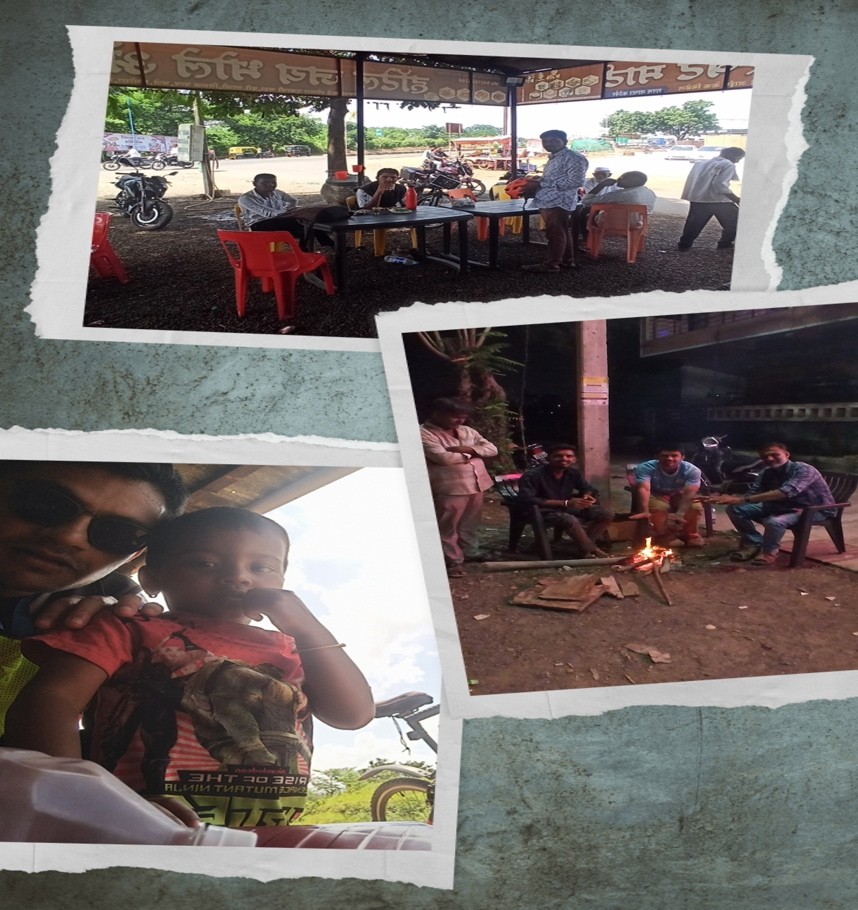
The eighth day, from Ambejogai to Jamkhed, felt endless. Maharashtra stretched outward in dry plains under an enormous open sky. I stopped now and then for ginger tea without sugar and a small local snack before pushing on again. Even exhaustion had turned normal by now. The bicycle had, quite completely, absorbed my life. Nothing special on this day.
DAY 9 · (14 October 2025)
The Final Ride Home: Jamkhed to Pune via Daund
There’s a strange sadness in the final stretch of any long journey. For days, life had turned brutally simple: wake up, pack, ride, eat a little, continue. Then, slowly, civilisation returns.
Traffic increases.
Horns return.
Buildings rise again.
People rush everywhere, the way they always do.
Pune looked exactly as I’d left it, but something inside me had shifted quietly over those nine days on the road.
Epilogue: What Remains
This journey was never about proving toughness. It was about experiencing Maharashtra honestly: through mountain climbs, tribal villages, highways, hunger, chai stalls, exhaustion, temple bells, dangerous descents, unexpected kindness, passing through the famous treks of Maharashtra like Konkankada, Harishchandragadh, Sandhan Valley, Andharban Forest Trail, etc along the road and long silent roads under open skies.
Tour de Jyotirlinga became one of those journeys where the road itself turned into prayer. And somewhere between Pune and the five Jyotirlingas, with a Damru hanging from my handlebar and the Sahyadris unfolding ahead of me, I understood something simple:
Mahadev was never waiting only at the temples.
He was present in every single kilometre between them.
ॐ नमः शिवाय
The five-syllabled salutation to Shiva, arguably the oldest and simplest prayer in this tradition. Somewhere past the seventh day, without quite planning to, I found myself repeating it in rhythm with the pedal stroke. I felt some strong connection of Damru, Trishul, Bicycle and Infinity which all show importance of balance in life according to me.
Tea, in the end, held the whole journey together: the trip was planned over tea, ridden through tea, and completed with a cup of tea as its final reward.
Thank You all…
Same bike…. New roads… Soon..


1 Comment
પશ્ચિમ ઘાટ ના સરપીલ માર્ગો અને વનરાજી થી ઘેરાયેલા શિવ ના સ્વરૂપ સમા જ્યોતિર્લિંગ ની યાત્રા ના સુંદર નિરૂપણ દ્વારા પ્રત્યક્ષ દર્શન નો અનુભવ અને સાઇકલ યાત્રા ના રોમાંચ નો બેવડ અનુભવ કરાવવા બદલ આભાર અને આવી સાઇકલ યાત્રા દ્વારા સતત ભ્રમણ કરતા રહો અને સફળતાની સીડીઓ ચડતા રહો તંદુરસ્ત રહો એજ શુભેચ્છાઓ. .પપ્પા-મમ્મી, કુટુંબ તથા nanihal(મોસાળ) નું નામ રોશન કરો